The most energy-efficient window is not simply the one with three panes. Triple-pane glass can help, but pane count alone does not tell you how a window will perform through a Canadian winter. Glazing, Low-E coatings, gas fills, spacers, frame construction and air leakage all shape the window's tested U-factor and Energy Rating (ER), and installation quality determines how much of that performance you actually get at home.
A window with strong tested ratings and proper installation can outperform one with a longer feature list. When you plan a window replacement, compare the tested performance of the complete unit, not one component in isolation.
What Makes a Window Energy Efficient?
An energy-efficient window slows heat transfer through the glass, the glass edge, the frame, and the installed opening. In winter, that keeps indoor heat where you want it and keeps the interior glass surface warmer. In summer, the right glazing controls how much solar heat gets in.
Air leakage matters just as much. Even strong glass underperforms if air moves around the sash, frame or opening. Glazing, Low-E coatings, gas fills, spacers, an insulated frame, tight seals and correct installation all contribute, and the sections below walk through each one.
Understand the ENERGY STAR Label
ENERGY STAR certification tells you a window actually meets Canada's energy-performance requirements, not just a vague label like "high efficiency." To qualify, a residential window needs either a U-factor of 1.22 W/m²·K or lower, or an Energy Rating of 34 or higher, plus air leakage at or below 1.5 L/s/m² in both directions.
Look for the ENERGY STAR symbol on the label, then check the model's U-factor and ER numbers against those thresholds so you can compare it directly with other windows.
If incentives are part of your project, check current Ontario window rebates separately, since eligibility and program requirements can change.
U-Factor: One of the Most Important Numbers
U-factor measures how fast heat moves through a window, and the lower the number, the better the window resists heat transfer. In a cold climate, that number directly affects how much heat you lose through the glass on a January night, so it's one of the first specs worth comparing.
Natural Resources Canada treats U-factor as a whole-window measurement; it includes the centre of the glass, the edge of the glass and the frame together. A strong centre-of-glass number on its own doesn't tell you how the finished window performs.
Lower U-factor = better insulation
What Is a Window Energy Rating (ER)?
Energy Rating, or ER, gives you a broader picture than U-factor alone. Where U-factor measures only heat transfer, ER combines heat loss, air leakage, and solar heat gain into one unitless number, so a higher ER means better overall performance.
SHGC, or Solar Heat Gain Coefficient, is the piece ER adds on top of U-factor: it measures how much solar heat comes in through the glass.
| Rating | What it tells you |
|---|---|
| U-factor | Rate of heat transfer through the window |
| ER | Overall performance using heat loss, air leakage and solar gain |
| SHGC | Amount of solar heat entering through the window |
Compare both numbers together. A window can have a decent U-factor and still lose points on ER if its air leakage or solar gain performance is weak.
Low-E Glass: Why the Coating Matters
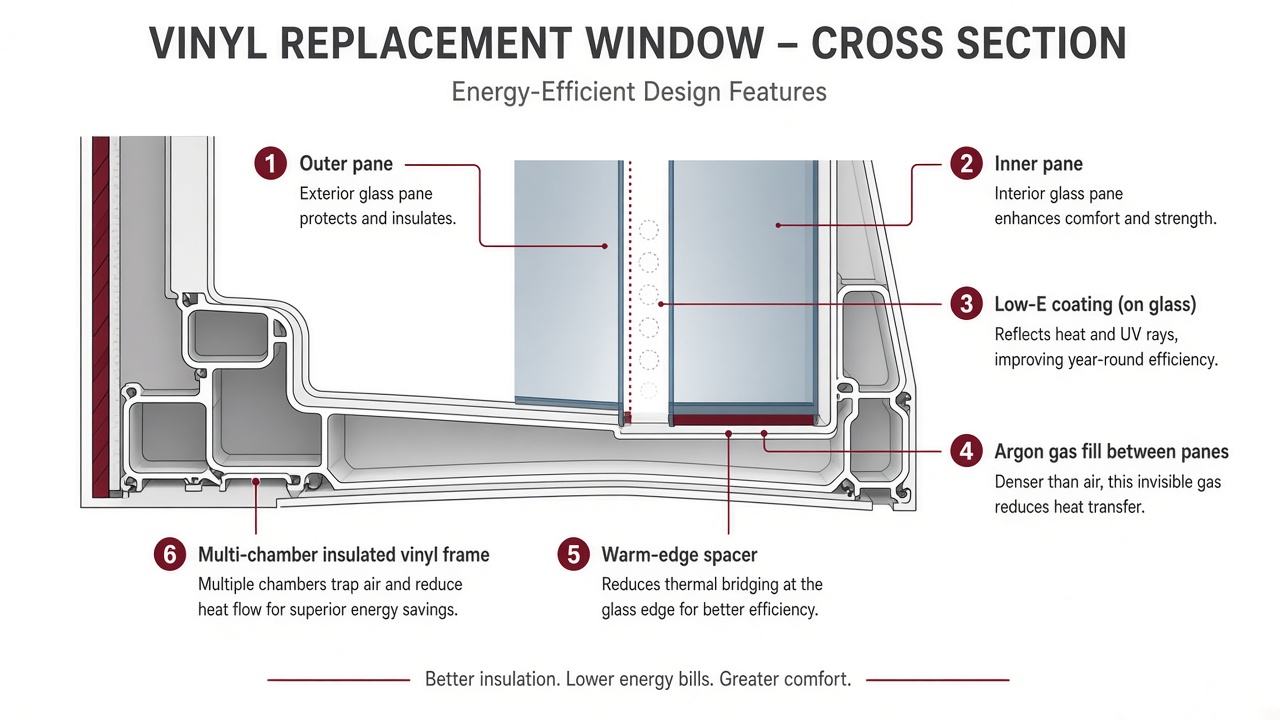
Low-E stands for low emissivity: a microscopically thin coating on the glass that controls infrared heat transfer without blocking visible light. In winter, it helps keep heat inside. In summer, the right configuration limits how much solar heat gets through.
Not every Low-E coating behaves the same way. Some let more solar heat in; others are built to limit it, depending on your window's orientation, your climate and the rest of the glazing package.
The coating is only one part of the window. You still need a strong frame, spacer system, gas fill, seals, and proper installation for it to perform as the rating suggests.
Argon Gas Between the Panes
Argon is an inert gas used between panes instead of ordinary air, and it slows heat transfer through the sealed space. It works together with the Low-E coating and the pane spacing, and it only does its job if the insulated glass unit stays properly sealed.
That's why "argon-filled" on its own tells you very little. Compare it alongside the U-factor, ER, glazing configuration and frame before judging a window by this one feature.
Double Pane vs Triple Pane: Does Another Pane Make a Big Difference?
Triple-pane windows use three layers of glass and two sealed air spaces; a typical double-pane window uses two layers and one sealed space. That extra pane and insulated space can reduce heat transfer and keep your interior glass surface warmer in cold weather, which also tends to improve condensation resistance.
Triple glazing can also cut down on exterior noise, though pane thickness, spacing and the rest of the assembly affect that too. The tradeoff is weight and price: triple-pane units cost more and weigh more to install.
| Feature | Double Pane | Triple Pane |
|---|---|---|
| Insulation | Good | Better |
| Cost | Lower | Higher |
| Condensation resistance | Good | Better |
| Sound reduction | Good | Potentially better |
| Cold-climate comfort | Good | Very good |
A high-performing double-pane window can still be the right call if its U-factor, ER, and air leakage meet your home's needs. Don't choose by pane count alone.
Don't Ignore the Window Frame
High-performance glass can't fully make up for a weak frame. Heat moves through the frame itself and around the edge of the glass, a path called thermal bridging, so the frame needs to carry its share of the insulation work.
Multi-chamber vinyl frames use internal chambers to slow that heat transfer, and some designs add insulation inside those cavities. The spacer matters too: it separates the panes around the edge of the glass unit, and a more conductive spacer material moves more heat than a thermally improved one.
Weatherstripping and frame seals control air leakage when the window is closed. Glazing, frame and spacer work as one system, not three separate specs.
Installation Can Make or Break an Energy-Efficient Window
Lab ratings describe the window product. They don't guarantee the finished opening performs the same way once it's installed. Gaps around the frame, insufficient insulation, incorrect sizing, poor caulking or weak water management can all cause drafts and lost comfort, even on a window with strong ratings on paper.
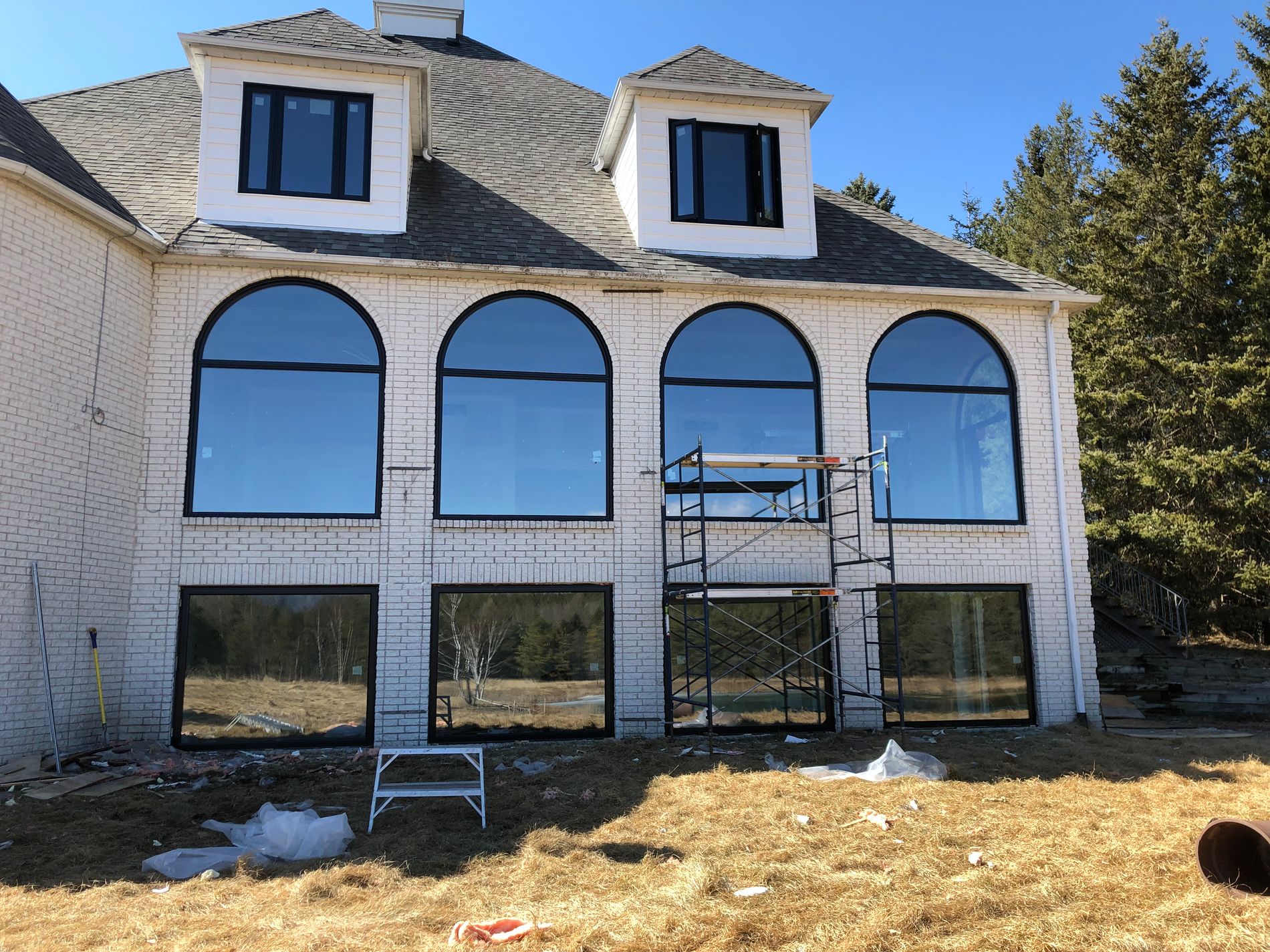
Professional installation starts with accurate measurement and proper preparation of the existing opening. The replacement unit needs to sit correctly, get insulated around the frame, and get sealed against air and water movement. Natural Resources Canada identifies airtight sealing and protection from water penetration as key parts of a proper window installation.
We use full-time, in-house crews for every window installation: measurement, removal, installation, sealing and insulation, cleanup and final inspection. If you're seeing drafts or failed seals, we can check them during a free window assessment before you plan a replacement.
What Should You Look for When Buying Windows in Canada?
Comparing energy-efficient windows in Canada comes down to looking at the full performance data, not any single feature in isolation. Before you buy, check that the window has:
- ENERGY STAR certification for the specific window model
- A low whole-window U-factor
- An ER and SHGC appropriate for the window's location and orientation
- Low-E glass suited to the required level of solar gain
- Argon or another inert gas inside the insulated glass unit
- Double or triple glazing suited to your comfort and budget needs
- An insulated, well-designed frame
- A thermally improved spacer system
- Strong air-leakage performance
- Professional measurement and installation
- Clear product and installation warranty terms
Orientation matters too. A window facing strong direct sun may need a different SHGC than one in a shaded spot. The best windows for a Canadian climate come down to glazing, frame, ratings, orientation and installation together, not one spec on its own.
Are Energy-Efficient Windows Worth It?
Energy-efficient windows can improve comfort when your existing units are drafty, poorly sealed, or thermally weak, and some configurations can also reduce outside noise. Better-performing windows give you warmer interior glass surfaces, less heat transfer, and better resistance to condensation, and ENERGY STAR models may qualify for efficiency programs when they meet the program's requirements.
How much you actually save depends on your existing windows, insulation, heating and cooling equipment, window size, orientation, local climate and installation quality, so a fixed savings percentage isn't a useful way to judge any one project. Compare your existing windows' condition, the proposed product's ratings, and the installation approach together.
FAQs

Igor Kontsevoy is an expert in the field of windows and doors installation and replacement with over 15+ years of experience, he has honed his skills in providing top-notch services to both residential and commercial clients. In free time, Igor enjoys exploring new technologies and gadgets, as well as spending time with his family and friends.
Window Experts Locations
Recent articles
Energy-Efficient Windows in Canada: What Actually Makes a Window Energy Efficient?
Why Basement Windows Leak After Heavy Rain (And When The Foundation Is The Real Problem)

Water Dripping From Top Of Window Frame? (Here’s Why)
